
An evolving international initiative exploring consciousness, cultural renewal and regenerative futures
Across the world, individuals, organisations and communities are working to create healthier, more equitable and regenerative futures. Yet even the most promising initiatives can struggle to take root. Projects remain at the margins, institutions revert to familiar patterns and transformational efforts lose momentum.
The newly established Centre for the Ecology of Human Transformation, an initiative of Alef Trust, begins with a simple but important proposition: transformation does not happen in isolation.
The ways in which people think, relate and act are influenced by social fields which in turn are shaped by cultural, economic and ecological dimensions. Just as ecosystems depend upon relationships that enable flourishing, meaningful change within human systems requires supportive conditions through which new possibilities can emerge, develop and endure.
The Centre brings together researchers, practitioners, and educators in communities of practice to explore and map the interactions between values, beliefs and mindsets and how they shape cultural narratives and human systems. Through collaborative research, transdisciplinary dialogue and practice, it seeks to illuminate the often less visible conditions that support human and planetary flourishing.
Exploring the deeper dynamics of change
Rather than offering a single framework or predetermined set of solutions, the Centre creates a shared space for inquiry.
Its work is guided by several central questions. What conditions encourage more generative ways of being and doing? Why do some transformational initiatives remain fragile while others gain wider influence? How do shared beliefs, values and cultural narratives shape the worlds we create? What spiritual, relational, organisational and ecological practices can support life-affirming futures?
At the heart of this inquiry is the recognition that consciousness is central to human transformation. Lasting change frequently involves profound shifts in awareness, perception and relationship – shifts which also require us to grapple with questions of ethics, power, social and ecological justice.
The Centre therefore welcomes multiple ways of knowing, including contemplative, somatic, intuitive, creative, ecological and spiritual perspectives. Its approach is transdisciplinary, participatory and critically reflective, acknowledging that no single discipline or worldview can fully explain the complexity of human transformation.
The Conscious Field Atlas
The Centre’s flagship initiative is the Conscious Field Atlas, a three-year participatory inquiry into the recurring patterns that shape transformation efforts across different cultures, sectors and communities.
The Field Atlas is not intended to be a conventional toolkit or prescriptive methodology. Instead, it is envisioned as a living grammar: a shared and continuously evolving language that can help practitioners recognise the deeper relational, psychological, cultural and systemic dynamics influencing their work.
Through collaborative research, dialogue and public storytelling, the initiative will explore frequently recurring issues such as breakdowns in trust, social and political double binds, performative versus embodied transformation, and the influence of power asymmetries within institutions that inhibit transformation.
By making these patterns more visible, the Centre hopes to strengthen the work of practitioners and projects within their own local contexts, while contributing the shared knowledge base in consciousness and systems change.
Inquiry grounded in practice
The Conscious Field Atlas is currently anchored by two dedicated Inquiry Labs.
The Living Earth Lab, led by practitioner-in-residence Dan McTiernan, explores ecology, food systems, land and regenerative practice. Its work considers how embodied awareness, ecological participation and relational intelligence can support transformation within farming, food systems and land stewardship.
This includes a Global Inquiry into Conscious Food Systems, developed in partnership with the UN’s Conscious Food Systems Alliance and the first Global Conscious Food Systems Summit in Bhutan taking place from 31 August to 4 September 2026. Dialogues will be convened across five world regions to explore what it would take for food systems to support both human and planetary flourishing.
The Living Organisations Lab, led by practitioner-in-residence Karen Liebenguth, works with leaders and organisations to investigate leadership, governance, organisational culture and regenerative transition. It examines how institutions can move beyond symbolic commitments and begin to embody transformation through their everyday relationships, decisions and practices.
A global practitioner commons
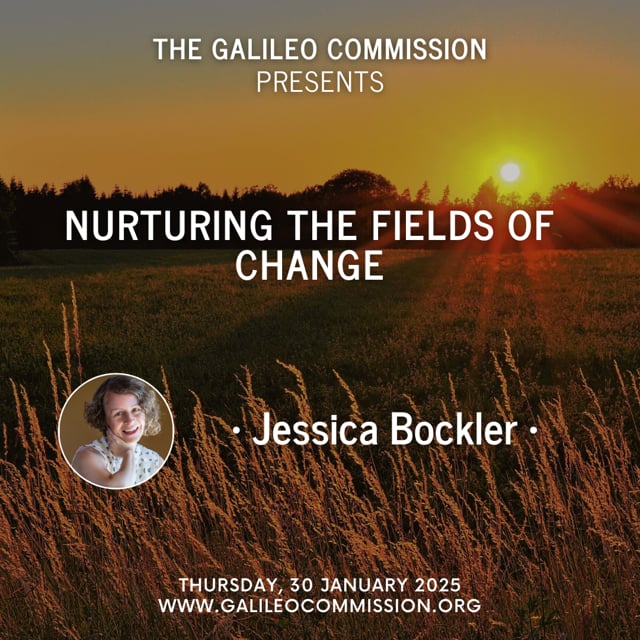
The Centre also hosts Nurturing the Fields of Change, an international community of practice for facilitators and researchers engaged in consciousness-informed, regenerative transformation.
The community offers networking, practitioner accompaniment, transdisciplinary inquiry, access to a growing resource library and opportunities to participate in emerging research and practice. It reflects one of the Centre’s central principles, that learning emerges through relationship. The Centre is not conceived as a closed institution, but as a collaborative ecosystem in which knowledge develops through shared inquiry, reflection, experimentation and collective imagination.
We now welcome Applications for Research Fellowships:
Applications are open for three inaugural Research Fellowships, beginning in Autumn 2026:
- Fellowship in Consciousness and Collective Intelligence
- Fellowship in Presence, Power and Social Renewal
- Fellowship in Embodiment, Spirituality and Planetary Flourishing
The Fellowships are intended to support the Centre’s flagship initiative and research and report outputs. Successful Fellows will contribute through evolving projects, publications, and storytelling. The Centre particularly welcomes applicants whose work bridges research and practice, including academics, educators, artists, organisational practitioners, community leaders and independent researchers.
Each Fellowship runs for 32 months, with an expected contribution of approximately five days per month and an honorarium of £40,800 pro rata per annum. The roles are conducted online.
Applications close on 20 September 2026.
We also invite you to join the inaugural Stewardship Circle:
The Centre is currently forming its first Stewardship Circle, a small group that will help cultivate its emerging vision and future direction.
Alongside invited members, we are opening two rotating places through a creative application process inviting responses to the question:
What is the wisdom of the invisible?
Submissions may take the form of a micro-essay, poem, short story, field notes or a micro case study of no more than 500 words.
Intrigued? Visit our website to find out more!
The deadline for submissions is 20 September 2026.
Partially funded PhD studentships:
The Centre is also able to offer one partially funded PhD studentship each year in 2026, 2027 and 2028.
The studentship provides an approximately 50 per cent contribution towards tuition fees and participation within the Centre’s wider ecosystem of research, inquiry labs, practitioner communities and collaborative projects.
Proposals may engage with topics relevant to the Centre’s overall direction, including consciousness and systems transformation, regenerative futures, presencing and collective intelligence, organisational culture, food systems transformation, and transformative education.
The Centre is particularly interested in interdisciplinary and practice-based research connecting inner development with social and ecological transformation.
An invitation to participate
The Centre for the Ecology of Human Transformation is an evolving experiment in collective learning, consciousness research and regenerative practice.
We warmly invite you to explore our work and join our evolving initiatives!








No Comments